 Reviews


 Proudly American


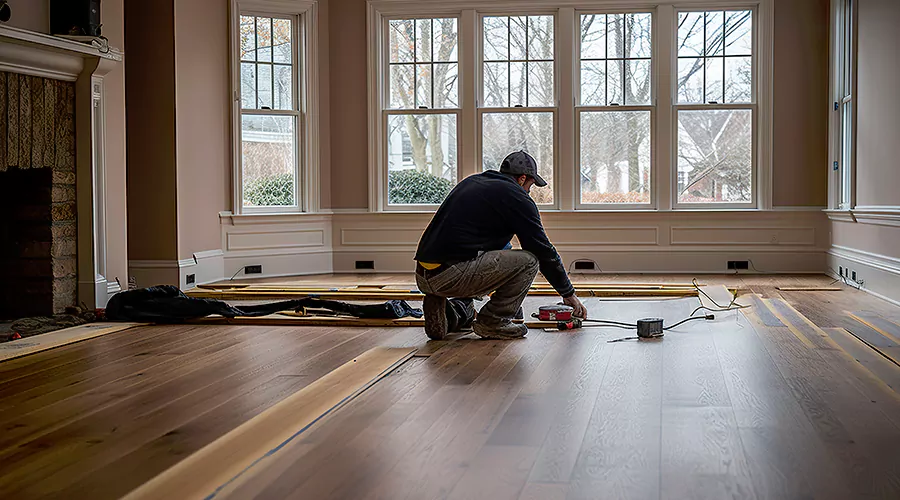
Parquet floors can usually be refinished when the wood blocks are stable and thick enough for another sanding. The process involves checking for loose pieces, repairing damaged blocks, sanding the surface evenly, then applying a compatible finish. Many residential projects take about 2 to 7 days before normal use resumes.
Parquet needs more care than straight-strip flooring because the grain direction changes across the pattern. Aggressive sanding in one direction can leave scratches on blocks whose grain runs another way.
When Can Parquet Floors Be Refinished?
Parquet is a good refinishing candidate when most blocks remain firmly attached and the damage is concentrated in the finish. Scratches or dull traffic areas usually respond better than floors with severe rot. Moisture problems should be corrected before any sanding begins.
Good candidates often have:
- A worn or dull finish
- Fine surface scratches
- Light discoloration
- Small gaps
- Isolated loose blocks
- Minor finish peeling
Refinishing parquet floors becomes less practical when many blocks are badly warped or the wood has already been sanded very thin.
| Floor Condition | Likely Approach |
|---|---|
| Dull finish | Recoat or refinish |
| Shallow scratches | Sand and refinish |
| Isolated loose blocks | Repair before sanding |
| Small missing sections | Patch with matching wood |
| Severe cupping | Correct moisture first |
| Soft or rotted blocks | Replace affected sections |
What Should You Check Before Sanding?
The floor should be stable and dry before sanding starts. Loose parquet can break or lift under sanding equipment. A moisture problem can also cause newly refinished blocks to move after the work is finished.
Check these areas first:
- Walk slowly across the entire floor.
- Listen for movement or clicking.
- Look for raised block corners.
- Mark loose sections with painter's tape.
- Check for water stains.
- Inspect previous repairs.
- Confirm that the subfloor isn't damp.
- Look for exposed nail heads or fasteners.
A moisture meter can help compare a questionable section with a similar dry part of the room.
How Do You Repair Loose Parquet Blocks?
Loose blocks should be stabilized before the floor is sanded. A block may loosen because old adhesive has failed or moisture caused movement. Simply pressing it down without correcting the cause can lead to another failure.
A small repair normally follows this order:
- Carefully remove the loose block if it can be lifted safely.
- Clean failed adhesive from the block and subfloor.
- Check the area for moisture.
- Apply a compatible flooring adhesive.
- Reset the block at the correct height.
- Keep it weighted until the adhesive cures.
Parquet floor repair becomes more difficult when several connected blocks move together. That condition can indicate wider adhesive failure.
How Should Parquet Floors Be Sanded?
Parquet should be sanded carefully because its blocks run in different grain directions. The goal is to remove the damaged finish without creating cross-grain scratches or reducing the thickness more than necessary. Sanding and refinishing hardwood floors usually begins with a grit suited to the floor's condition. The process then moves through finer abrasives until sanding marks are reduced enough for finishing.
A typical sequence is:
- Remove the old finish with controlled sanding.
- Sand edges with suitable equipment.
- Use progressively finer abrasives.
- Vacuum sanding dust thoroughly.
- Inspect the floor under good lighting.
- Correct visible sanding marks before finishing.
Do not start with an unnecessarily aggressive abrasive on an old parquet floor.
Should Gaps Be Filled Before Refinishing?
Small stable gaps can sometimes be filled after the main sanding stage. Seasonal gaps need more caution because wood naturally expands and contracts as indoor humidity changes. Large moving gaps should not simply be packed with rigid filler. The filler can crack when the floor moves again. Indoor humidity around 30 to 50 percent helps reduce excessive seasonal movement in wood flooring.
Should Parquet Be Stained?
Parquet can be stained when the wood species and existing condition allow even absorption. However, stain often highlights variations between blocks. Old repairs may absorb color differently from the original flooring. Test the stain in a hidden area first. Natural or clear finishes are often easier to keep visually consistent on floors that contain replacement pieces or several wood tones.
What Finish Can Be Applied to Parquet?
The finish protects the newly sanded wood from normal wear and moisture. The right coating depends on the existing floor and the appearance you want.
Common options include:
- Water-based floor finish
- Oil-based floor finish
- Compatible maintenance coating
Each product has its own drying and cure schedule. Light foot traffic may be possible before the finish reaches full hardness. Avoid placing rugs or heavy furniture back too early.
How Much Does Parquet Refinishing Cost?
Traditional hardwood refinishing commonly costs around $3 to $8 per square foot in 2026. A typical project may total roughly $1,100 to $2,700 depending on floor size and repair needs. Detailed parquet work can cost more because individual blocks may need repair before refinishing.
| Work Needed | Effect on Cost |
|---|---|
| Standard sanding | Moderate |
| Finish application | Moderate |
| Several loose blocks | Higher |
| Missing block replacement | Higher |
| Subfloor repair | Much higher |
| Extensive water damage | May approach replacement cost |
Wood floor refinishing usually costs less than replacing an otherwise stable parquet floor.
What Mistakes Should You Avoid?
Many parquet problems happen because restoration work begins before the floor is properly evaluated.
Avoid:
- Sanding loose blocks
- Sanding recently wet flooring
- Using a steam mop before refinishing
- Starting with overly coarse abrasives
- Filling moving seasonal gaps rigidly
- Applying finish over sanding dust
- Returning furniture before curing
Hardwood floor refinishing should remove as little sound wood as practical.
When Should You Call a Professional?
Professional assessment is useful when many parquet blocks are loose or the floor has been refinished several times. Older patterns can also be difficult to repair because matching replacement blocks may not be readily available.
Consider professional help when:
- Large sections move underfoot.
- The remaining wood thickness is uncertain.
- Water damage affected the subfloor.
- Historic patterns need preservation.
- Several previous repairs have failed.
- Blocks are severely uneven.
- The floor contains extensive old adhesive problems.
How Do You Care for Refinished Parquet?
Routine maintenance protects the new finish and reduces how often deep sanding is needed.
Use these habits:
- Vacuum or dust regularly.
- Wipe spills promptly.
- Avoid wet mopping.
- Avoid steam cleaners.
- Use a finish-compatible cleaner.
- Add protective pads beneath furniture.
- Keep indoor humidity near 30 to 50 percent.
A maintenance coat can sometimes refresh a worn finish before bare wood becomes exposed.
Conclusion
Refinishing parquet floors can restore worn wood without replacing an original patterned floor. Repair loose blocks first and confirm that moisture levels are stable before sanding. Use controlled sanding because the grain changes direction throughout the pattern. A stable floor with adequate thickness is usually a good restoration candidate. This week, inspect the floor for movement and raised blocks before planning any refinishing work.
Frequently Asked Questions
Can every parquet floor be sanded?
No. Very thin blocks or floors that have already been heavily sanded may not have enough usable wood remaining.
Can loose parquet be refinished?
Yes, after the loose blocks have been properly repaired and the cause of movement has been corrected.
How long does parquet refinishing take?
Many residential projects take about 2 to 7 days. Repairs can add more time.
Can parquet be refinished without staining?
Yes. A clear or natural finish can be applied after sanding when you want to preserve the wood's original color.
Can water-damaged parquet be sanded?
Only after the moisture problem has been corrected and the wood has dried enough to stabilize.
How much does parquet refinishing cost?
Traditional refinishing commonly runs about $3 to $8 per square foot in 2026 before extensive repairs.